

How Long Does It Take to Build a Custom Home in Texas? A Realistic Timeline Breakdown
One of the first questions homeowners ask when considering a custom build is simple: How long will it take? The answer, however, depends on several variables—including planning decisions, home complexity, permitting, and external factors such as weather and material availability.
In Texas, the average custom home takes 8 to 12 months to complete, but understanding what happens during each phase helps set realistic expectations and prevents frustration during the process.
Below is a detailed breakdown of the custom home construction timeline in Texas, from planning to move-in.
Phase 1: Pre-Construction Planning (1–3 Months)
Pre-construction is the most overlooked—and most important—stage of the entire build. Time invested here directly impacts cost control and construction efficiency later.
This phase typically includes:
Finalizing architectural plans and layouts
Engineering and structural reviews
Lot evaluation and site planning
Selecting materials, finishes, and fixtures
Establishing a detailed construction budget
Homeowners who rush this phase often experience delays and costly change orders once construction begins. A thorough pre-construction process creates clarity and minimizes surprises.
Phase 2: Permits, Approvals, and Scheduling (1–2 Months)
Before ground can be broken, required approvals must be obtained. Depending on location, this may involve:
City or county building permits
HOA or architectural committee approvals
Septic or well permits (if applicable)
Utility coordination
Permitting timelines vary widely across Texas jurisdictions. Some rural areas move quickly, while certain municipalities or HOAs require extended review periods.
During this phase, builders also finalize trade schedules and material orders to prepare for construction.
Phase 3: Site Preparation and Foundation (3–5 Weeks)
Once permits are issued, physical construction begins.
This stage includes:
Clearing and grading the lot
Soil testing (if not already completed)
Excavation
Foundation installation
Texas soil conditions vary significantly, and foundation type (slab, pier and beam, or post-tension) affects both cost and timeline. Weather can also impact this phase, particularly during heavy rain.
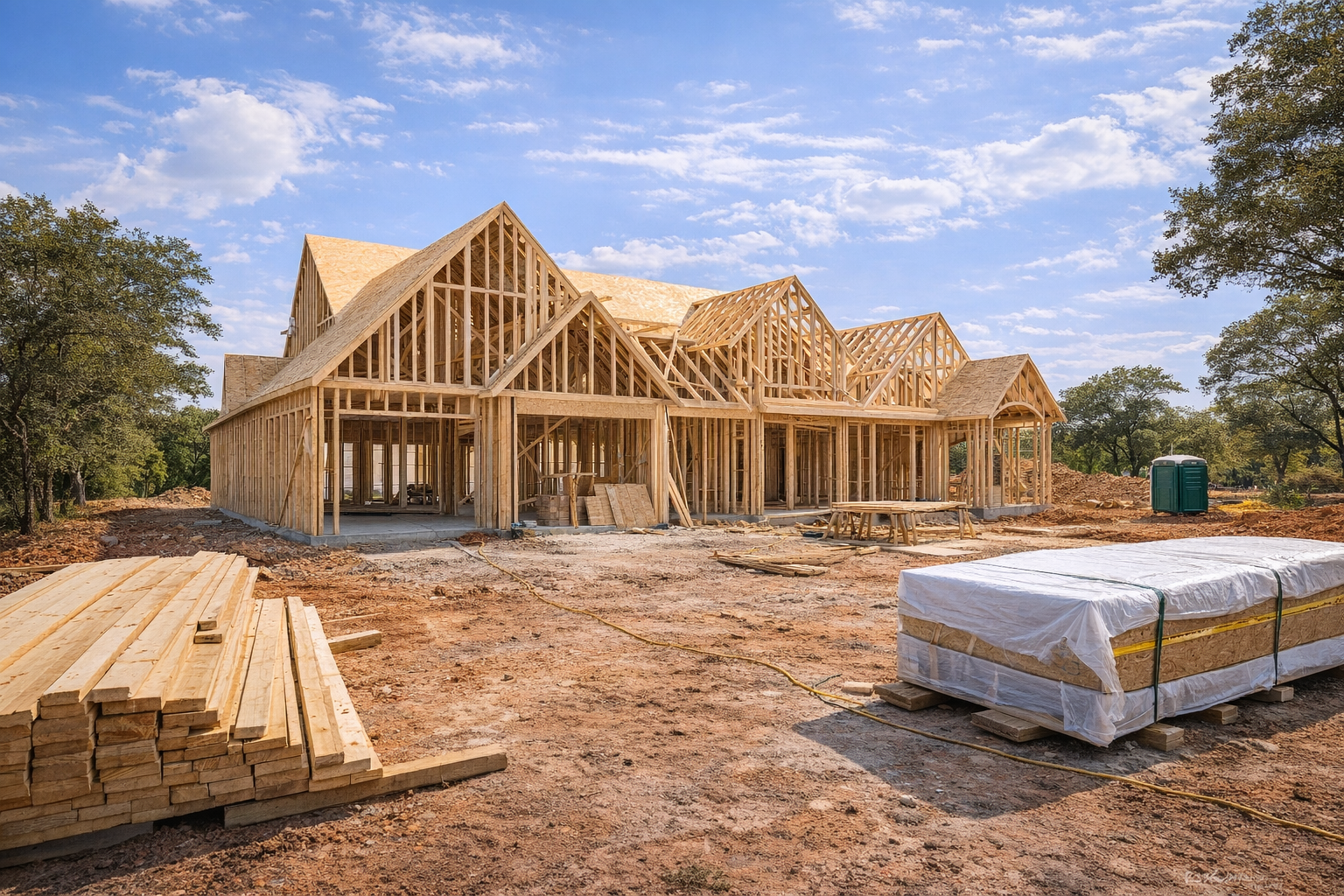
Phase 4: Framing and Exterior Shell (6–8 Weeks)
Framing is when the home truly begins to take shape. During this phase, crews complete:
Structural framing
Roof installation
Windows and exterior doors
Weatherproofing
Once the home is “dried in,” interior work can proceed regardless of most weather conditions.
This phase often feels fast for homeowners, as visible progress occurs daily.
Phase 5: Mechanical Systems (4–6 Weeks)
Mechanical rough-ins follow framing and include:
Electrical wiring
Plumbing systems
HVAC ductwork
Inspections are required before walls can be closed. Coordination between trades is critical here, as errors or missed inspections can cause delays.
Phase 6: Insulation, Drywall, and Interior Finishes (8–12 Weeks)
This is the longest phase and includes:
Insulation installation
Drywall hanging and finishing
Cabinetry and millwork
Flooring installation
Painting and trim
Fixture and appliance installation
Because this phase involves many selections, delays often occur when materials are back-ordered or decisions are made late. Homes with higher levels of customization typically spend more time here.
Phase 7: Final Inspections and Walkthrough (2–3 Weeks)
As construction wraps up, final steps include:
Code compliance inspections
Final utility connections
Builder quality checks
Homeowner walkthrough and punch list
Any outstanding items are addressed before closing. A thorough final walkthrough ensures the home is delivered as agreed.
What Can Extend a Custom Home Timeline?
Even well-managed builds can experience delays. Common factors include:
Weather (especially rain and extreme heat)
Permit or inspection backlogs
Material shortages
Late design changes by homeowners
Clear communication and early planning significantly reduce timeline disruptions.
Setting the Right Expectations
A custom home is not a production build. It is a complex project involving dozens of professionals, inspections, and coordinated schedules. While timelines matter, quality and proper execution should always take priority over speed.
Understanding the full process allows homeowners to plan realistically, make informed decisions, and enjoy a smoother building experience.
